FDIC-Insured-Backed by the full faith and credit of the U.S. Government
Climate First Bank Finances Texas Battery Storage Projects to Support Cleaner, More Reliable Power
Madeleine Hepting
November 5, 2026
As electricity demand grows, communities need affordable power they can count on. Climate First Bank is helping meet that need by financing battery storage projects that give the electric grid greater flexibility and help make better use of increasingly abundant renewable energy resources.
What is Battery Storage?
Battery storage gives the electric grid something it has historically had very little of: the ability to store electricity when it is abundant and deploy it rapidly when it is needed.
A Battery Energy Storage System, or BESS, can charge when electricity is plentiful and lower-cost, including during periods of strong wind or solar generation, and then return that electricity back to the grid when demand rises or additional power is needed.
That flexibility is increasingly important as the electric system evolves. Wind and solar generation do not always coincide with the times when electricity demand is highest. Battery storage can help bridge that gap while also responding rapidly to changing grid conditions, shifting energy from lower-demand to higher-demand periods, and providing additional flexibility during periods of grid stress.
The result is an electric system that can make better use of renewable energy resources while maintaining the reliability consumers expect.
In Texas, the case for battery storage is especially compelling. The state is already a national leader in renewable energy, and demand is rising as extreme weather continues to test the grid. Battery storage can help connect Texas's abundant energy supply with the times when communities and the grid need power most.
How does Climate First Bank support Battery Storage Projects?
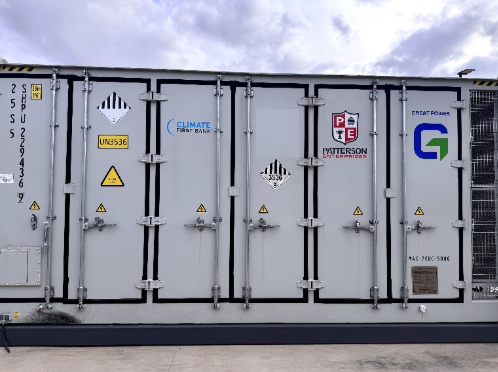
Climate First Bank is expanding access to battery storage financing, supporting innovative energy solutions that reflect our mission to put people and the planet first. By financing Battery Energy Storage Systems in markets like Texas, where electricity demand is growing, we can help scale practical infrastructure that reduces environmental impact, strengthens grid resilience, and creates new economic opportunities.
Hana Freymiller, SVP, Director of Energy Project Finance at Climate First Bank, explained, "Climate First is proud to bring clean, reliable power to communities across the country. Far too many communities across our country struggle with expensive, unreliable, and dirty power. Battery storage is a game changer, turning renewable energy into clean, affordable, electricity generation that can be stored when it is abundant and deployed when communities and the grid need it most."
A 4-hour battery can discharge at its rated power level for approximately four hours. For example, a 10 MW / 4-hour system can deliver up to 10 megawatts of power for four hours, or about 40 megawatt hours in total.
That duration is particularly useful because it can cover important windows when electricity demand is high, renewable generation is shifting, or the grid needs extra support.
Recent projects financed by Climate First Bank are designed at 9.9 MW, just below a key 10 MW threshold in Texas. Projects below that size can qualify for a simpler process to connect to ERCOT, the grid operator that serves most of the state. That can mean fewer delays, more predictable development, and faster progress toward adding storage capacity where it is needed.
The two examples below are both 9.9 MW / 4-hour BESS projects. Together, they show how targeted financing can move clean-energy infrastructure from concept to construction while creating practical value for local communities and project owners.
Project 1: Tom Bess
In Cuero, Texas, Climate First Bank financed the installation of a 9.9 MW / 4-hour Battery Energy Storage System, with completion expected by the end of this year.
The system can store about 40 MWh of electricity and connect directly to the local distribution system through the Guadalupe Valley Electric Cooperative (GVEC) Cuero Substation. GVEC is a cooperative utility that has served rural communities in southwest Texas since 1938, so the project can help bring flexible storage capacity closer to the communities that need it.
Tom Bess can store electricity from cleaner sources and release it later, making renewable energy more useful. Additionally, it can charge when prices are lower, discharge when prices rise, and respond rapidly when the grid needs additional power.
This ability to store electricity when it is plentiful and lower-cost and discharge it when electricity is scarce and more valuable creates an economic incentive that can align the project's financial performance with the needs of the electric grid.
For southwest Texas, that means a single project can help advance cleaner energy, grid flexibility, local resilience, and be a practical revenue model at the same time.
Project 2: Prairie Dog
Prairie Dog is another 9.9 MW / 4-hour BESS project, located on a property in Lubbock, Texas, with completion expected by December 15, 2026.
Once operational, it is expected to provide approximately 40 MWh of storage capacity and serve the local distribution system through the Lubbock Power & Light Slaton Substation.
That local connection adds flexible capacity to the distribution system during periods of high demand, changing renewable generation, or other times when additional grid support is valuable.
The facility will also be able to work with the local utility and participate in Texas power markets, allowing it to provide grid support while creating revenue opportunities.
Prairie Dog demonstrates how distributed-scale battery storage can combine environmental and economic benefits. By storing electricity when it is abundant and deploying it when it is more valuable to the electric system, the project can help make Texas's growing renewable supply more useful and reliable while creating multiple paths to long-term financial sustainability.
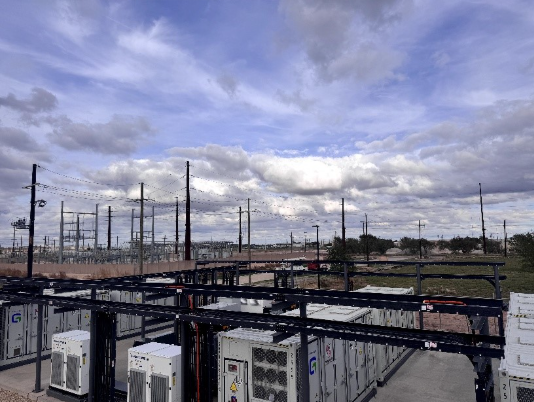
Together, Tom BESS and Prairie Dog demonstrate how appropriately scaled battery storage, thoughtful project development, and accessible financing can help modernize the electric grid. By financing projects like these, Climate First Bank is helping turn the transition toward cleaner and more flexible energy infrastructure into projects that can be built, operated, and sustained in the communities they serve.
More from Climate First Bank


Bank like tomorrow depends on it.
Quick Links
Contact Us